|
Complete final finishing of escapement, begin balance springs testing - August 2016
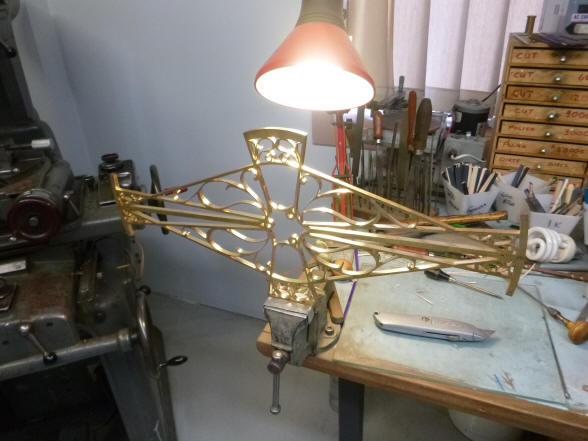
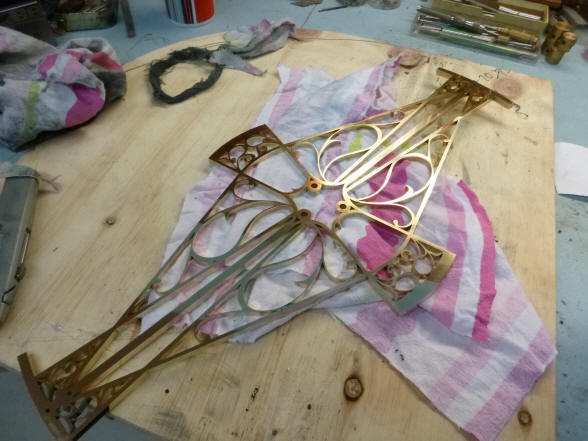
The second balance is nearing completion for the final finish
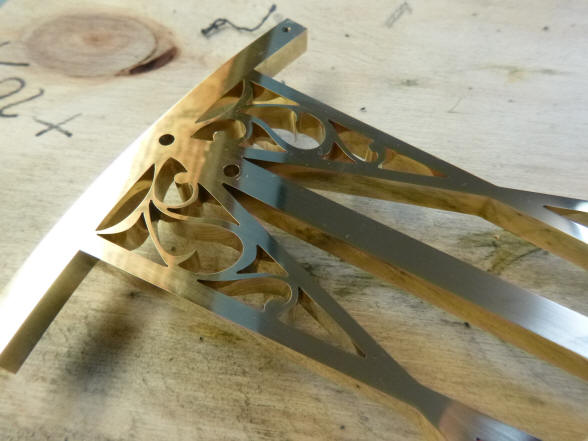
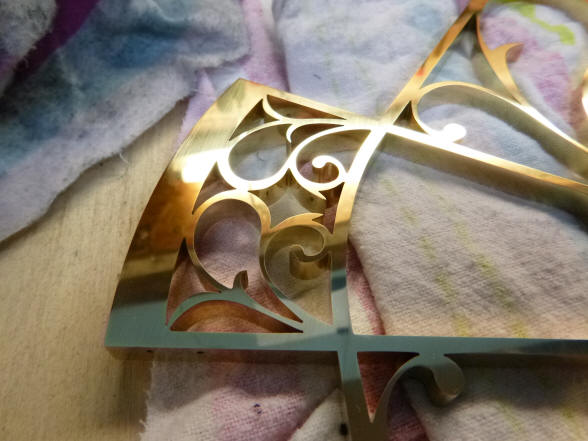
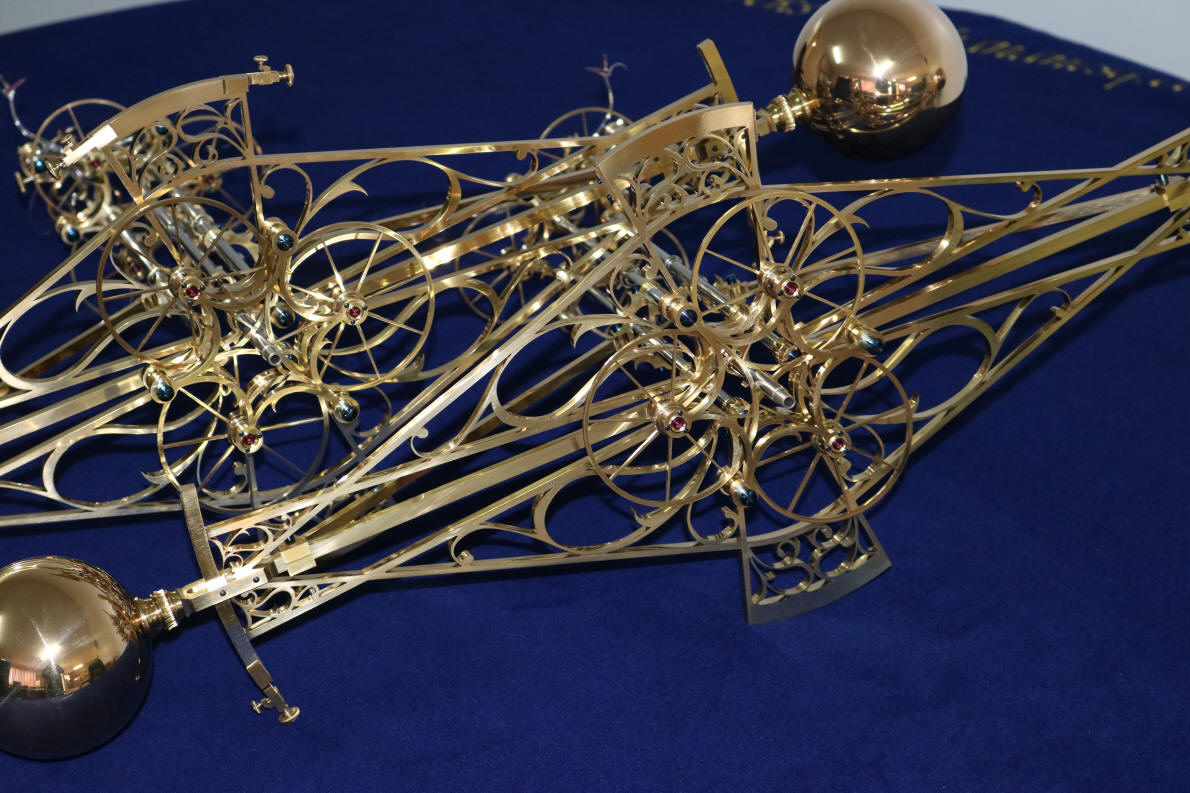
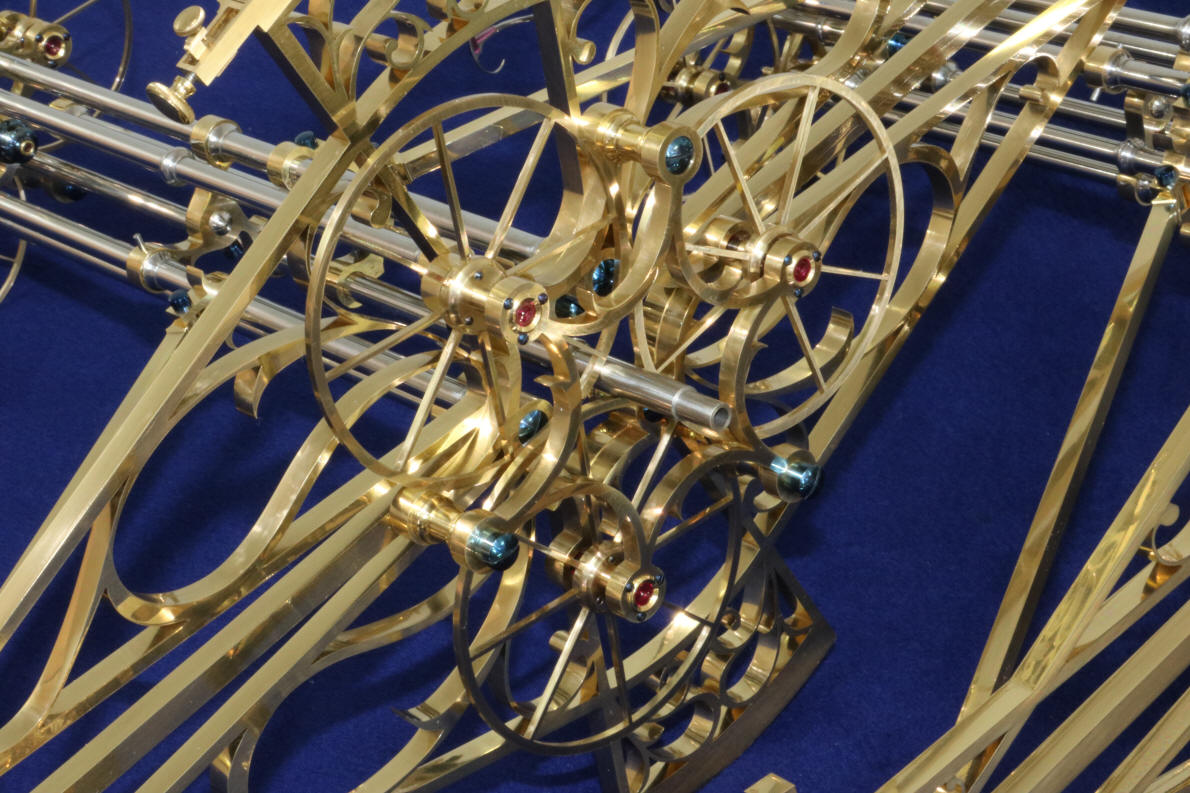
These two photos give an idea of the quality of the polish both on the exterior surface but more importantly the difficult to work inside curves and corners.
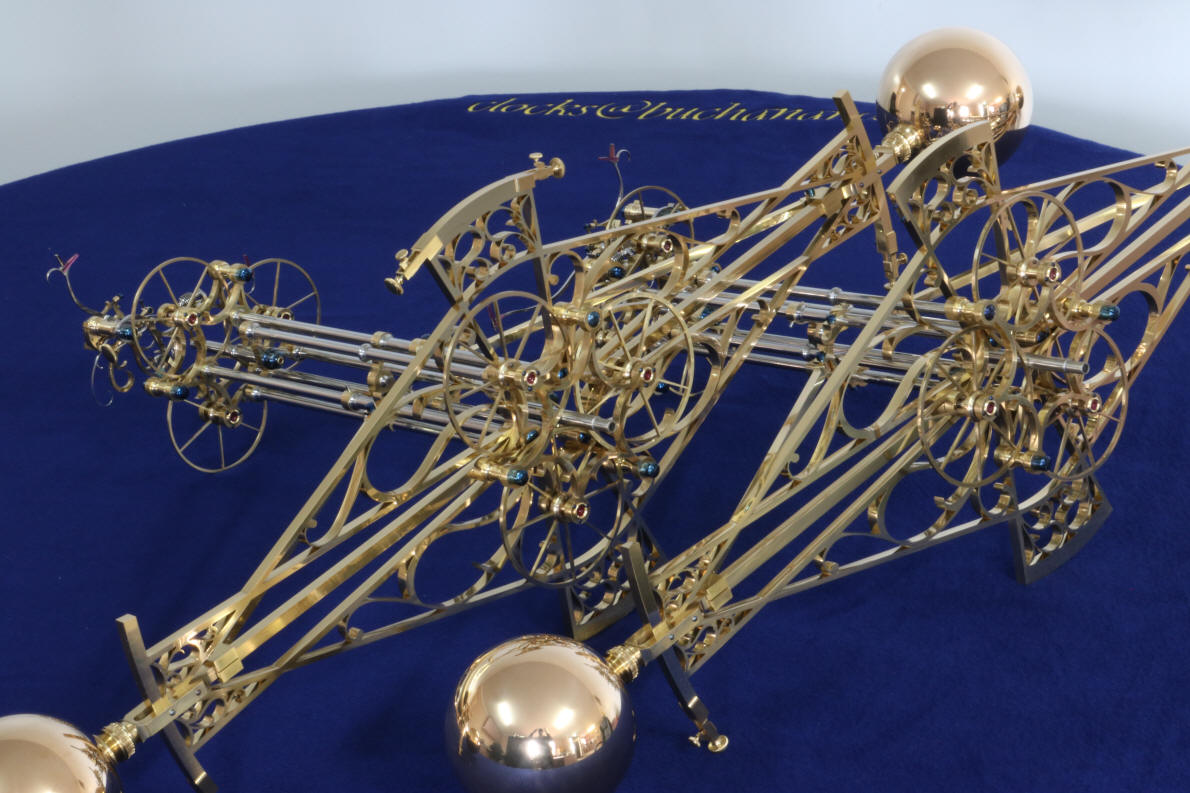
The pair of balances and escapements complete. Every part that can be protected with a lacquer coating is covered. This is absolutely necessary since it will still be a couple of years before a decision is reached as to whether these components will stay lacquered or will have that stripped in preparation for a flash-gold plating or even a type of electroplated clear plastic coating. The latter is used in the plumbing industry to coat gold-plated faucet fixtures. Either way the surfaces cannot remain open to the air for that period of time or the entire surface area would have to be gone over again with a final touch up.
Close up of the rear triple antifriction wheel support.
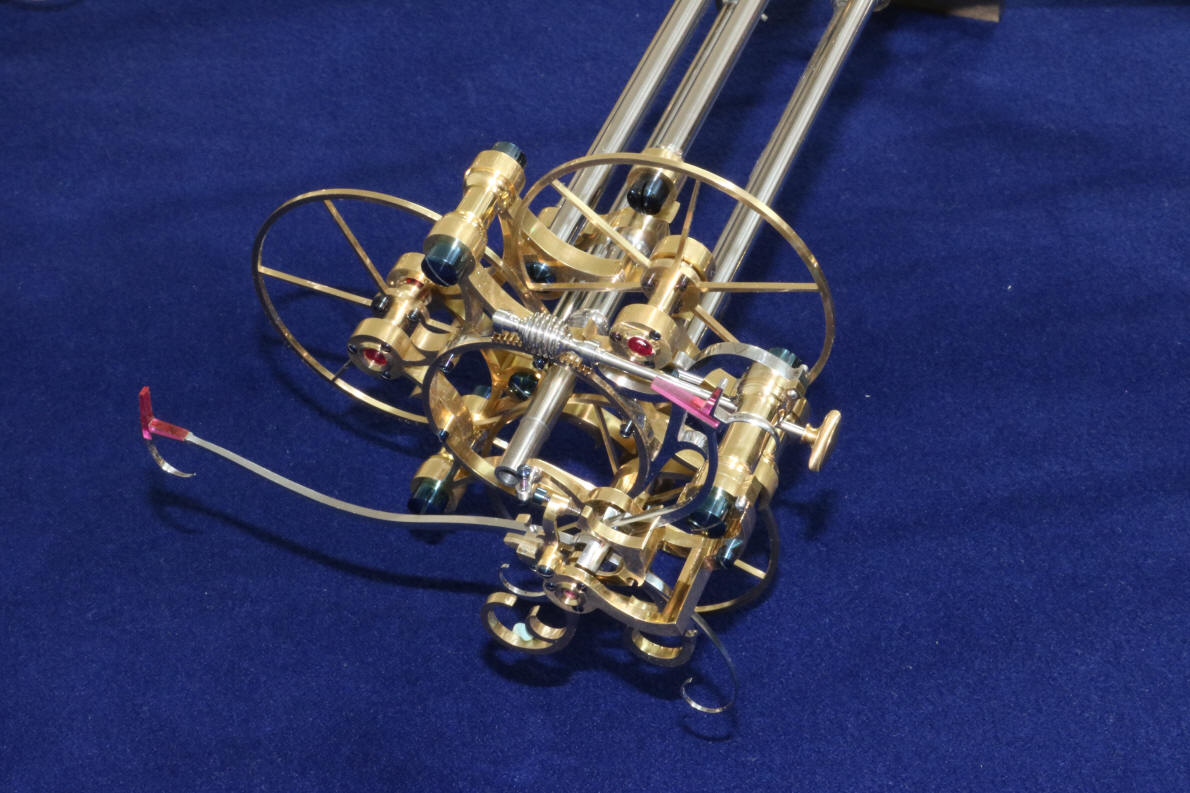
Close up of escapement and front triple anti-friction wheel support.
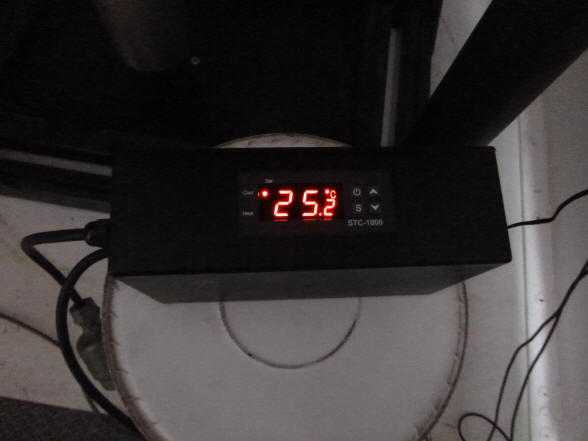
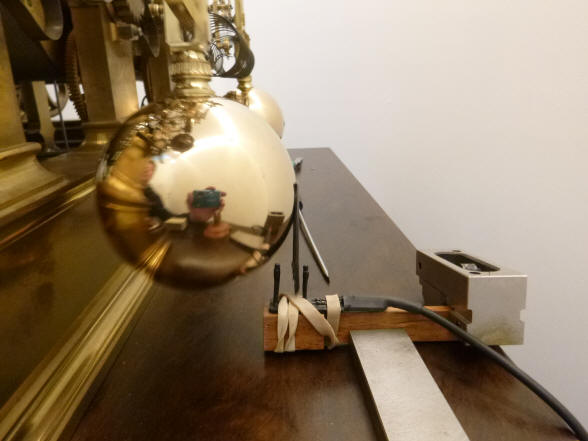
Buchanan now begins the first test for the rating of the pendulums. The first photo shows a temperature controller to obtain accurate results of temperature vs. rate. The second photo is a close up of the timer sensor near one of the pendulums.
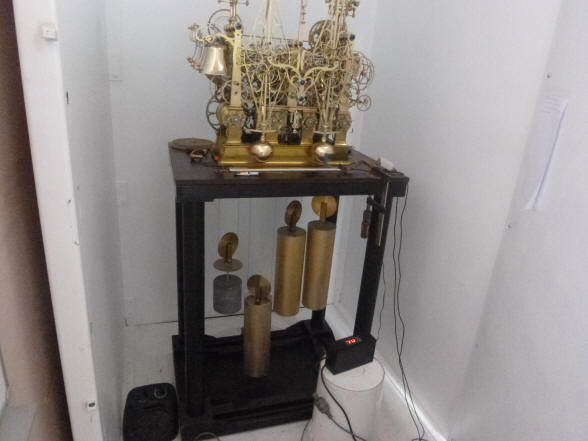
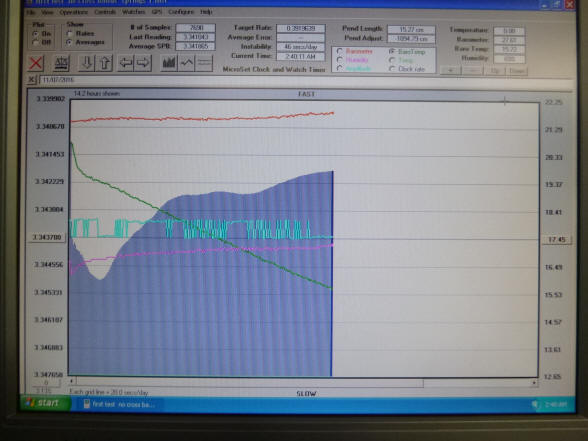
A rear view of the machine with the timer setup. The last photo is a screen shot of the first test. The first trial is with the springs made from piano wire that have been fitted last May. They are made of high strength carbon steel. However this material has a poor performance with regards to changes in temperature. The temperature was changed from 20.4 C to 15.55 C in this run. The rate went from a loss of 56 seconds per day to a gain of 24 seconds; a rate change of 80 seconds over a five degree change in temperature giving us a change of 16 seconds a day per each degree change in temperature. So now we have two factors to consider. The first is the effect of the physical changes in the pendulums themselves with change in temperature and the second are the springs. The next move is to obtain a spring material that is less or better yet impervious to changes in temperature which leads us to Invar or some similar type of material.
Buchanan checked several sources from both the USA as well as the United
Kingdom. A Chinese source was found to be the most economical.
They
came in
at $2.36 per meter x 10 meters for $12.36 than the folks out of the UK
quoted
earlier
this month for $544.38 for minimum of 100 meters. No wonder the Chinese are
kicking our asses around the world!
|