|
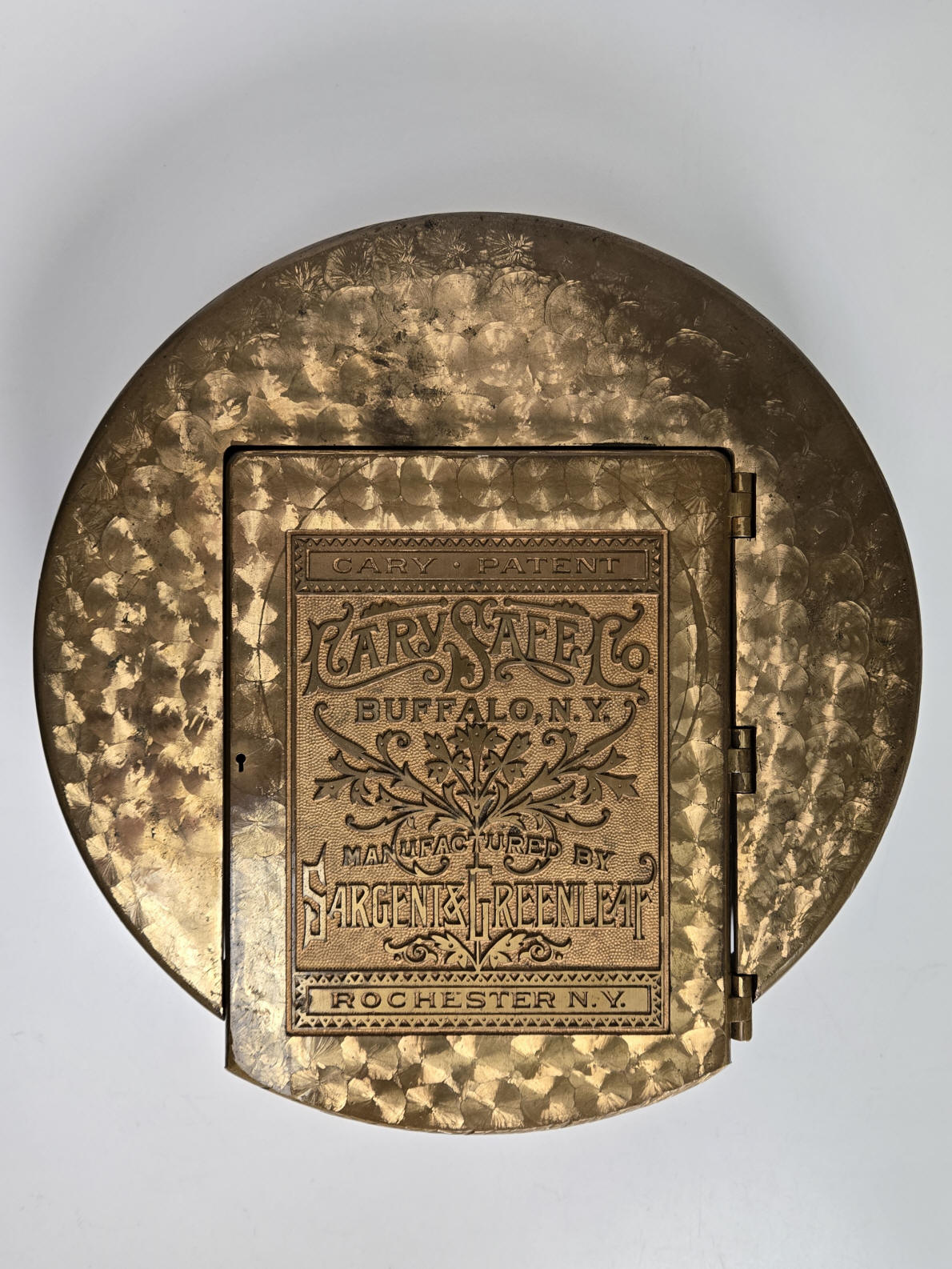
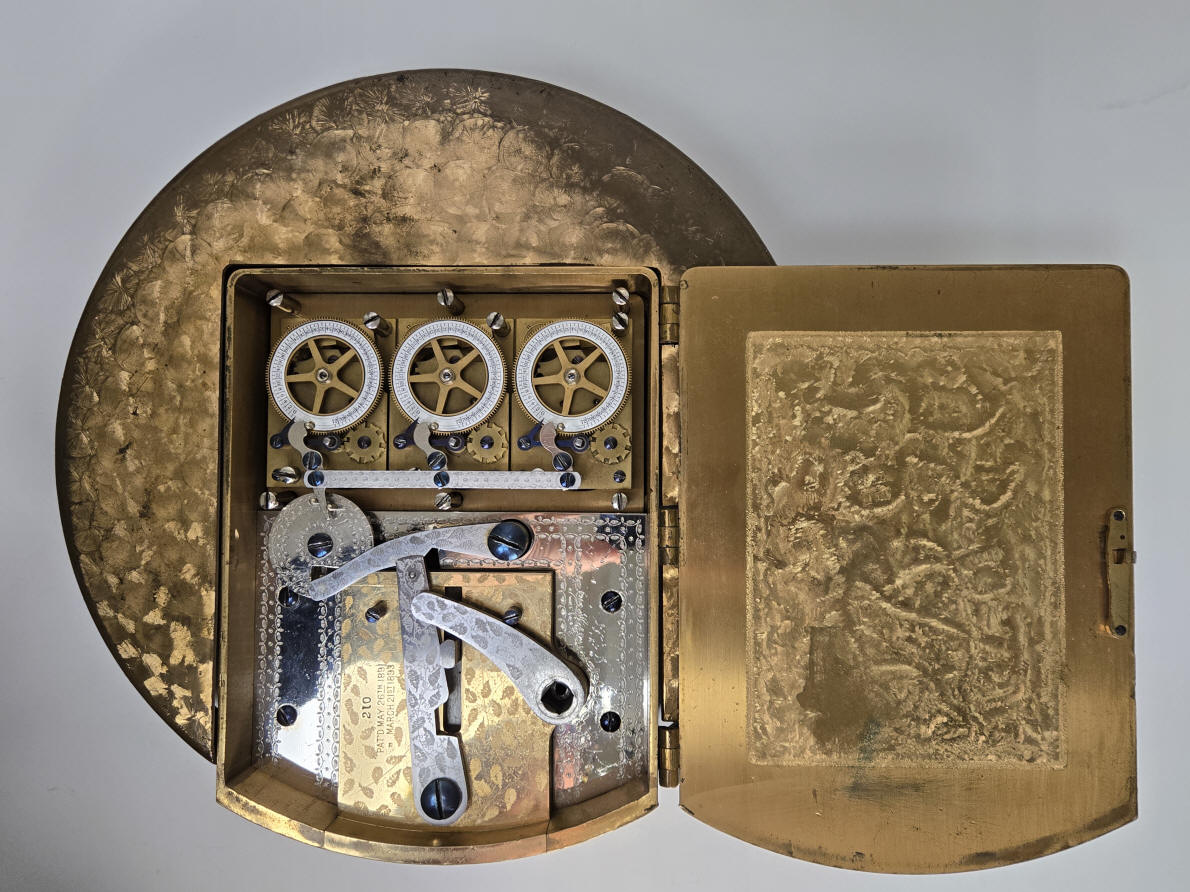
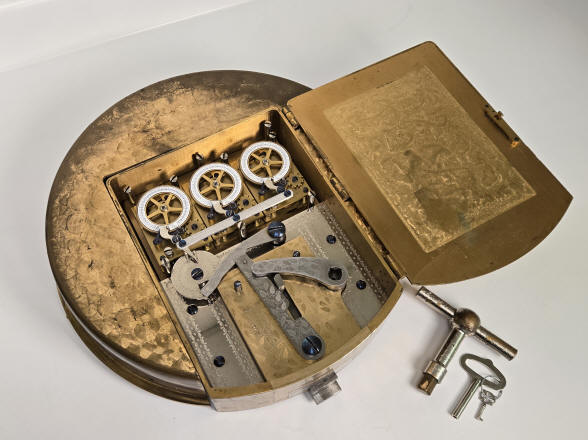
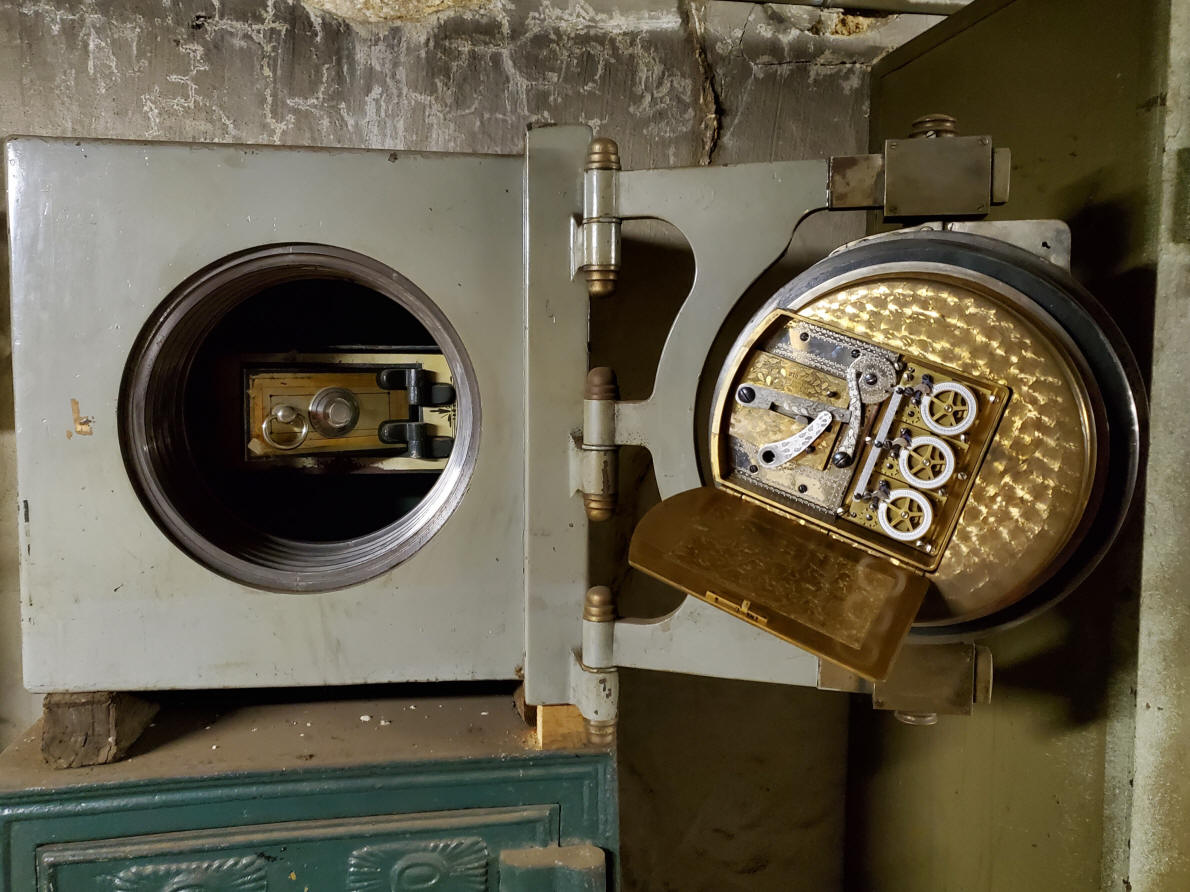
Sargent & Greenleaf custom time lock and automatic bolt motor for Cary Safe Co.
Time lock with surrounding escutcheon.
Time lock open and showing elaborate damascening of the inside of the door.
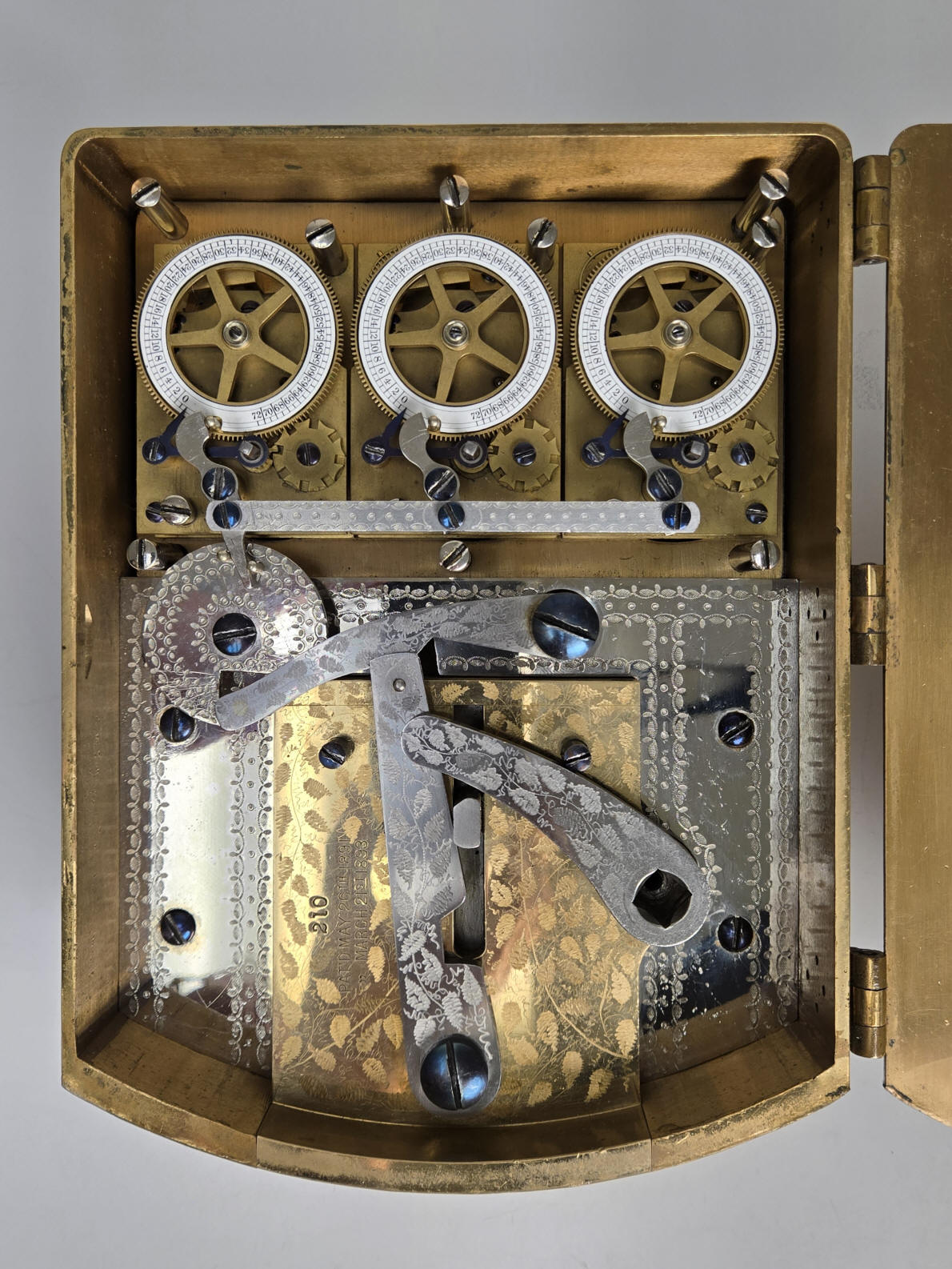
Close up of the time lock and bolt motor mechanisms.
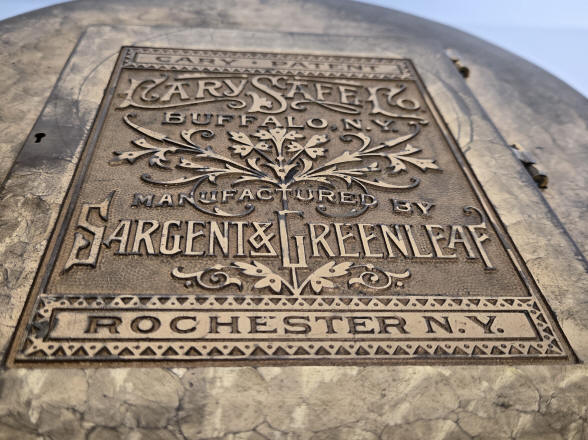
Door decoration is done in high relief.
Time lock on the Cary Safe door before removal.
Video shows how the time lock with automatic bolt motor works.
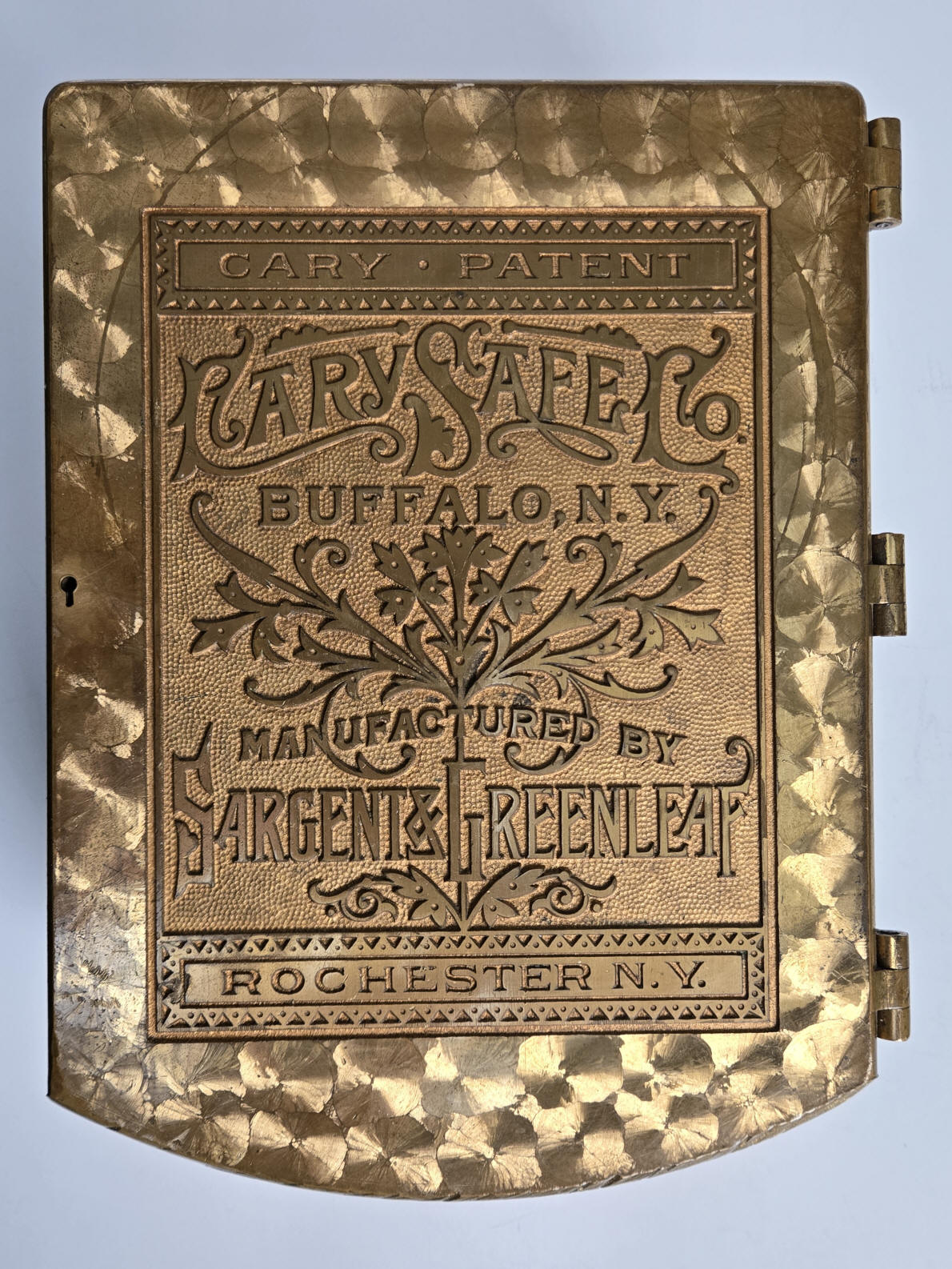
A second incomplete example missing the S&G time lock mechanism.
To the left is the door insert held by a screwed-in frame. The insert is certainly an OEM part from S&G considering the elaborate damascene patter on both sides. This may have been either a later replacement for a door that was originally a glass insert, or perhaps a cheaper version of the lock lacking the elaborate logo engravings.
A. The Cary Safe Company of Rochester, New York, was among a fair number of safe makers offering time locked freestanding money chests for bank use around the end of the nineteenth century. Many of the more successful safe makers developed a close relationship with a specific bank lock maker, and Cary Safe has such a rapport with nearby Sargent & Greenleaf that allowed Cary Safe to offer its own custom-built time in its patented screw door model safes, beginning around 1893. ¹The rounded, scalloped portion matched the curve of the screw type door. In John Erroll's book he illustrates a partial example as being the only one known, however this example as well as a photo below of an unknown, nearly complete example does exist. 9"h x 7"w x 3"d. file 383 B. An incomplete example with mockup movements to show how the missing S&G time lock unit would have looked. Door has an OEM insert for the door. This may have been a replacement for what may have been glass since the engraved door shown in the first example is manufactured as an integral part of the door. 9"h x 7"w x 3"d. file 275 (1) American Genius Nineteenth Century Bank Locks and Time Locks, David & John Erroll, pp. 286-287
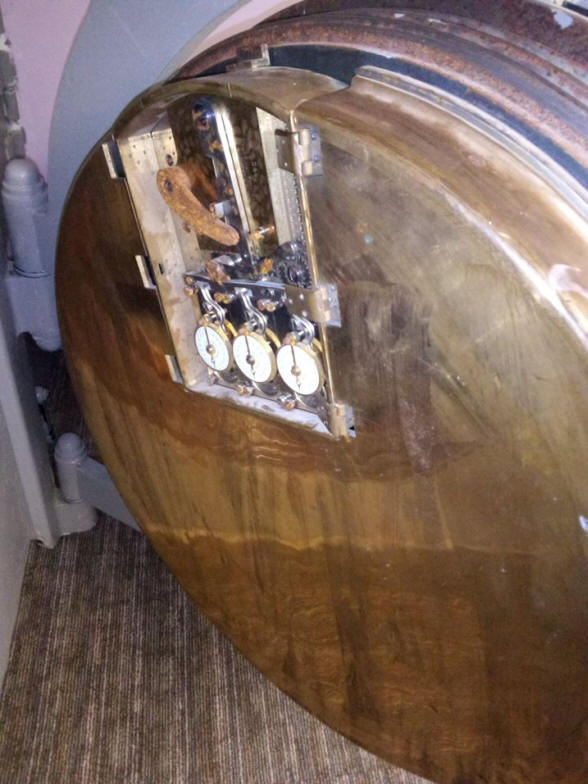
This photo from an unknown source, and probably from a clock show since the yellow card refers to a Dey Time Register Co. which is the wood cabinet below. This is missing the engraved decorative plate surrounding the bolt motor. Other than the first example shown above this is the most complete lock this author has seen.
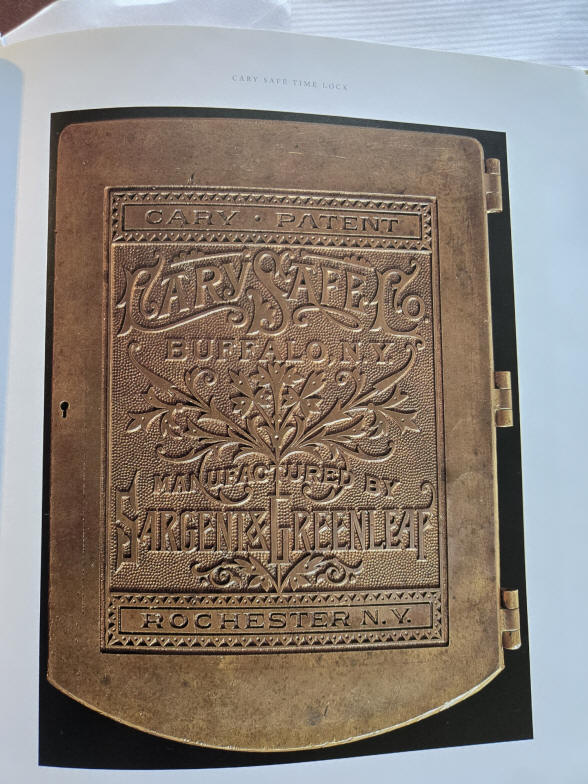
The first photo shows a functional example where the original S&G time locks have been replaced with modern Mosler movements. This is likely due to the difficulty of servicing the original aging and obsolete S&G movements. The door also appears to be missing. The second photo is from American Genius by John and David Erroll, page 287. This example is missing the entire S&G time lock unit. All of the existing examples with the exception of the first one illustrated have a rusted bolt actuation lever. This is curious as the lever shown in the first example is plated in the same manner as all of the other steel levers and plates and so should not be singularly subject to the additional corrosion not seen on other adjacent parts. |
 A
A B
B